Blog / Quality of Life
The HHHHHMM Scale: A Pet Quality of Life Guide for Families
HHHHHMM scale explained for pet owners facing end-of-life decisions. Learn each of the 7 criteria and how vets use the framework at home.

Dr. Jina Song, DVM
What Is the HHHHHMM Scale?
The HHHHHMM scale is a structured quality-of-life framework developed by veterinary oncologist Dr. Alice Villalobos in 2004. It gives families and vets a shared language for evaluating whether a seriously ill or ageing pet is experiencing more comfort than suffering on any given day. The name is an acronym: Hurt, Hunger, Hydration, Hygiene, Happiness, Mobility, and More good days than bad.
This is general information about how the framework is used. It is not a substitute for a veterinary assessment of your specific pet.
Why Vets Use a Structured Framework
When a pet is living with chronic kidney disease, cancer, heart failure, or advanced arthritis, the question families ask most often is: *How will I know when it is time?* It is one of the hardest questions in veterinary medicine, and it rarely has a single clear answer.
A structured framework helps in three ways. First, it gives families something concrete to do: observe, score, and record. Second, it removes some of the guilt from the process by grounding the decision in observable facts rather than gut feeling alone. Third, it creates a record over time. A score of 35 today that drops to 22 two weeks later tells a clearer story than memory alone.
The HHHHHMM scale was developed originally for veterinary oncology patients (Villalobos, 2004), but it has since been adopted widely across palliative and hospice care for companion animals. CAETA and IAAHPC both reference it in their training curricula.
The Seven Criteria, Explained
Each criterion is scored on a scale of 1 to 10, where 10 represents an ideal state and 1 represents severe compromise. A total score above 35 out of 70 is generally considered an acceptable quality of life, though no number replaces clinical judgement.
Hurt
Pain management is the first and most weighted consideration. A pet scoring low here is in uncontrolled pain or struggling to breathe. Signs include panting at rest, reluctance to move, changes in posture (a hunched back or tucked abdomen), guarding a limb or body area, and withdrawing from touch.
Importantly, dogs and cats evolved to hide pain. A calm-looking pet is not necessarily a comfortable one. Respiratory rate at rest, facial tension, and subtle postural changes often reveal what behaviour conceals. Your vet can assess pain more reliably than observation alone.
Hunger
Is the pet eating enough to maintain reasonable body condition? A score here reflects not just whether food is consumed but whether the pet can eat without distress, whether the effort of eating is exhausting, and whether nausea or oral pain is limiting intake.
For cats in particular, prolonged anorexia (more than 48 to 72 hours) carries a specific risk: hepatic lipidosis, or fatty liver disease, can develop when a cat mobilises fat stores in the absence of adequate caloric intake. This is one reason hunger is scored separately from weight.
Hydration
Dehydration is uncomfortable. It causes lethargy, dry mucous membranes, and, in advanced states, confusion. A pet who cannot drink independently or who vomits fluids back may be scoring low here even if they are still attempting to drink.
Skin turgor (the way skin snaps back when gently lifted at the scruff) is one rough indicator, but accurate assessment requires a vet examination. Subcutaneous fluid administration can sometimes support hydration at home for pets with chronic kidney disease, under veterinary guidance.
Hygiene
Can the pet be kept clean and free from sores, matting, urine scalding, or wound odour? This criterion reflects both the pet's own capacity to groom and the family's ability to assist.
For pets who are incontinent or largely immobile, pressure sores and urine scalding can develop quickly and cause significant discomfort. A pet who cannot be kept reasonably clean despite attentive care may be scoring low here. This is not a reflection on the family; it is a clinical observation.
Happiness
This criterion asks whether the pet still shows interest in life: in family members, in food smells, in a favourite spot by the window, in play or social interaction at whatever level their condition permits.
A pet who has stopped seeking connection, who stares at walls, who no longer responds to the approaches of people they previously welcomed, may be experiencing something that scores meaningfully low here. Cognitive dysfunction syndrome (dementia in dogs and cats) can complicate this assessment, because affected pets may disengage without necessarily suffering in the same way. Your vet can help distinguish the two.
Mobility
Can the pet move enough to satisfy basic needs and, ideally, still experience some pleasure from movement? This does not require a pet to run. It asks whether they can reposition themselves to avoid pressure sores, reach food and water, and move to a preferred rest spot without pain or distress.
Conditions like intervertebral disc disease (IVDD) in dachshunds and other chondrodystrophic breeds, degenerative myelopathy in German shepherds, and severe hip dysplasia in larger breeds often drive low scores here. Mobility aids, physiotherapy, and pain management (meloxicam and gabapentin are two commonly used medications, always under veterinary prescription) can sometimes improve this score meaningfully.
More Good Days Than Bad
The final criterion is the most holistic. Across a recent week or fortnight, has the pet had more days where they were comfortable, engaged, and present than days where they were clearly suffering or withdrawn?
This is often the criterion families find most resonant. It also serves as a check on the others: a pet can score moderately on six criteria and still have a net experience that tilts toward suffering if the bad days are consistently worse than the good ones.
How to Use the Scale at Home
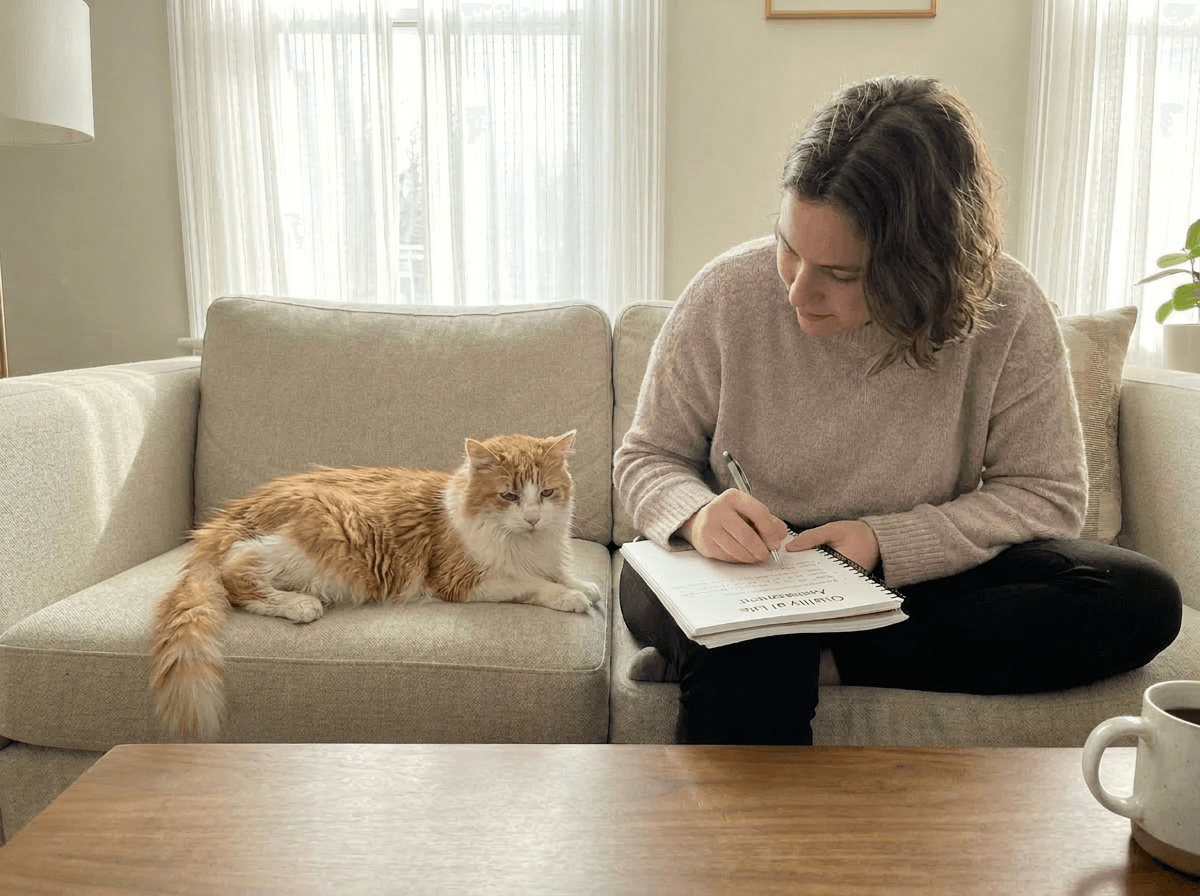
Using the HHHHHMM scale as a home monitoring tool works best when done consistently. Here is a simple approach:
- 1.Print or write out the seven criteria.
- 2.Each evening, score each criterion from 1 to 10 based on what you observed that day.
- 3.Total the scores. Note anything specific that influenced a low or high score.
- 4.Keep the record somewhere easy to find, a notes app or a simple notebook both work.
- 5.Bring the record to your next vet appointment, or share it ahead of a telehealth call.
A pattern of declining scores over two to three weeks is clinically meaningful. A single bad day, especially following a procedure, a change in weather, or a minor upset, does not necessarily signal a trend.
What a Vet Adds to the Framework
The HHHHHMM scale is a communication and monitoring tool, not a diagnostic test. Several of its criteria (Hurt, Hydration) require clinical skills to assess accurately. A vet examining your pet at home can:
- •Assess pain through physical examination, palpation, and observation of gait and posture
- •Check hydration status objectively
- •Discuss whether current medications are controlling symptoms as well as they could
- •Walk through your recorded scores and flag trends you may not have noticed
- •Help you understand whether the score reflects a stable plateau or a decline
At At Home Vetcare, this structured conversation is the core of a Quality of Life Consultation. The visit runs 45 to 60 minutes, uses the HHHHHMM framework as its spine, and ends with a written summary you can refer back to. If your family decides during the visit that the time has come, the same appointment can proceed to a calm, unhurried Home Euthanasia without any need to reschedule or travel.
A Note on Scoring and Emotion
Families sometimes score their pet higher than a vet would. This is not self-deception; it is love operating under enormous pressure. The reverse also happens: a family exhausted by months of caregiving may score lower than the pet's actual experience warrants.
Neither tendency is a failure. It is one reason a veterinary perspective alongside your own observations produces a more complete picture than either alone. The goal of the scale is not to reach a number. The goal is a shared, honest conversation about your pet's daily experience.
When to Call Us
If you have been tracking your pet's quality of life and would like a vet to examine them at home and walk through the HHHHHMM framework with you, a Quality of Life Consultation ($179) is the right starting point. For families in Melbourne who are further along in the process, you can also read about Home Euthanasia before contacting us.
When to call us
If this article is relevant to a decision you're weighing, here are the services that match.
Common questions
What does HHHHHMM stand for in the pet quality of life scale?
HHHHHMM stands for Hurt, Hunger, Hydration, Hygiene, Happiness, Mobility, and More good days than bad. Each of the seven criteria is scored from 1 to 10, where 10 is the best possible state. A total score above 35 out of 70 is generally considered to reflect an acceptable quality of life, though the number should always be interpreted alongside a veterinary assessment of your specific pet.
Who developed the HHHHHMM quality of life scale?
The HHHHHMM scale was developed by Dr. Alice Villalobos, a veterinary oncologist, in 2004. It was originally designed for cancer patients in veterinary practice and has since been adopted widely in palliative and hospice care for companion animals. It is referenced in the training curricula of both CAETA (Companion Animal Euthanasia Training Academy) and IAAHPC (International Association for Animal Hospice and Palliative Care).
How often should I score my pet using the HHHHHMM scale?
Scoring once daily, ideally at the same time each evening, gives the most useful picture. A single low-scoring day does not necessarily signal a trend, but a pattern of declining scores over two to three weeks is clinically meaningful. Keep a written or digital record and bring it to your next vet appointment. The record gives your vet something concrete to discuss rather than relying on your memory of a stressful period.
What score on the HHHHHMM scale means it is time for euthanasia?
There is no single score that means it is definitively time. The commonly cited threshold is a total below 35 out of 70, which indicates more suffering than comfort. However, a score above 35 does not mean euthanasia should not be considered, particularly if one or two criteria are severely compromised or if the trend is consistently downward. This decision involves clinical findings, your family's observations, and a conversation with your vet. It is not a number alone.
Can I use the HHHHHMM scale for cats as well as dogs?
Yes. The framework applies to both cats and dogs, and it is used in veterinary practice for both species. Some criteria require species-specific interpretation. Cats, for example, are more likely to hide pain and withdraw socially, which affects how the Hurt and Happiness criteria present. Cats are also at specific risk of hepatic lipidosis during prolonged anorexia, making the Hunger criterion particularly important to monitor carefully and discuss with your vet.
What happens during a quality of life consultation at home?
A Quality of Life Consultation with At Home Vetcare runs 45 to 60 minutes and takes place in your home. Dr. Jina Song conducts a physical examination of your pet and works through the HHHHHMM framework with your family, incorporating any scores you have already been tracking. The visit ends with a written summary. If your family decides during the consultation that today is the right day, the appointment can proceed directly to a calm home euthanasia visit without rescheduling. The consultation costs $179.
Sources
- Villalobos Quality of Life Scale (HHHHHMM), original framework, Originating source for the HHHHHMM framework, cited for attribution of authorship and scoring methodology
- CAETA (Companion Animal Euthanasia Training Academy), Referenced as an organisation that incorporates HHHHHMM into euthanasia training curricula
- IAAHPC (International Association for Animal Hospice and Palliative Care), Referenced as an organisation that incorporates the framework into palliative care standards
We're Here When You Need Us
If you have questions about your pet's care or want to discuss your situation, please reach out. No pressure, no obligation.