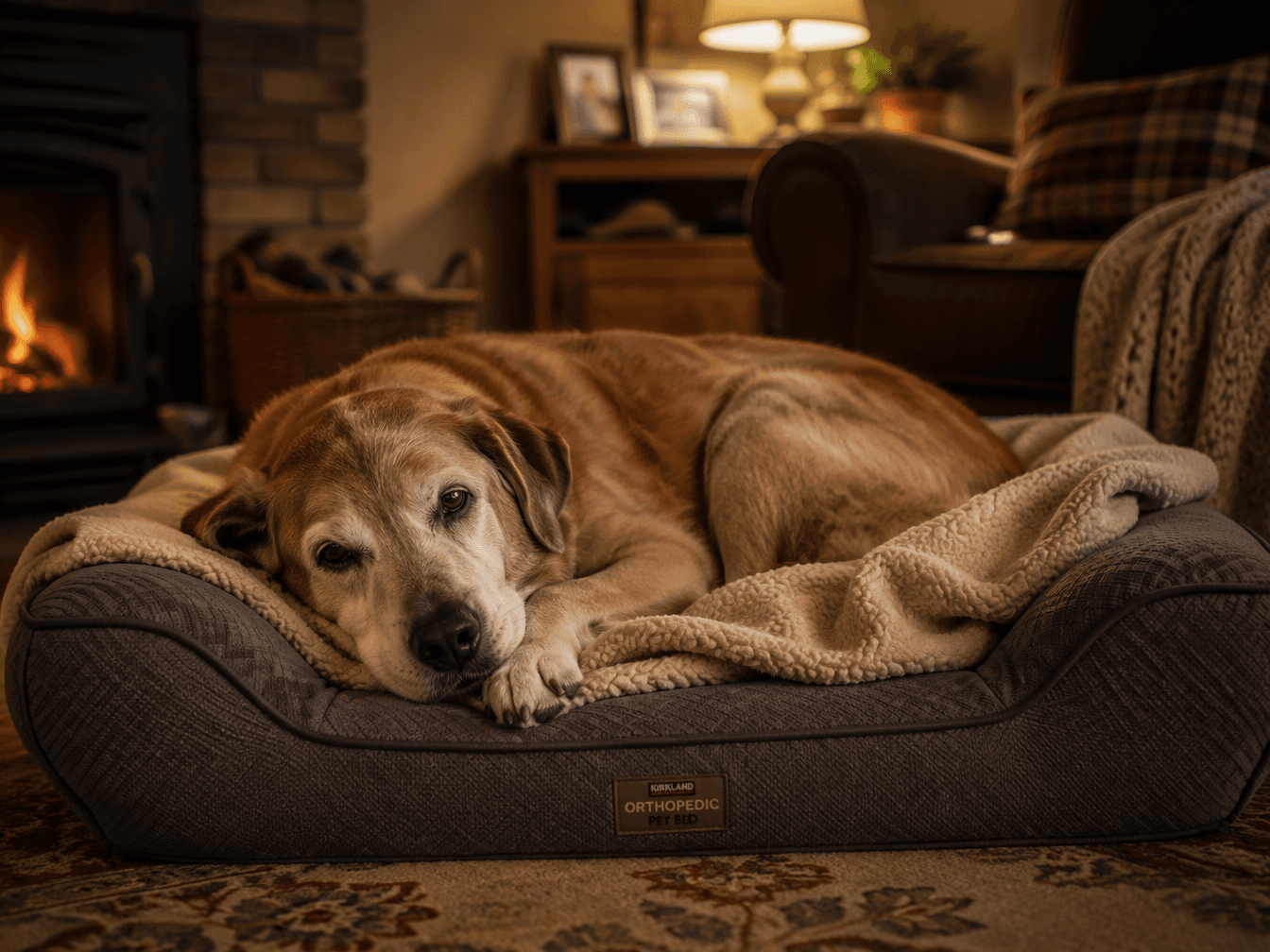
Blog / Senior Pet Care
5 Signs Your Senior Dog Is in Pain | At Home Vetcare
Signs of pain in older dogs are often subtle. Here are 5 specific things to watch for, and when to call a vet for an at-home assessment.

Dr. Jina Song, DVM
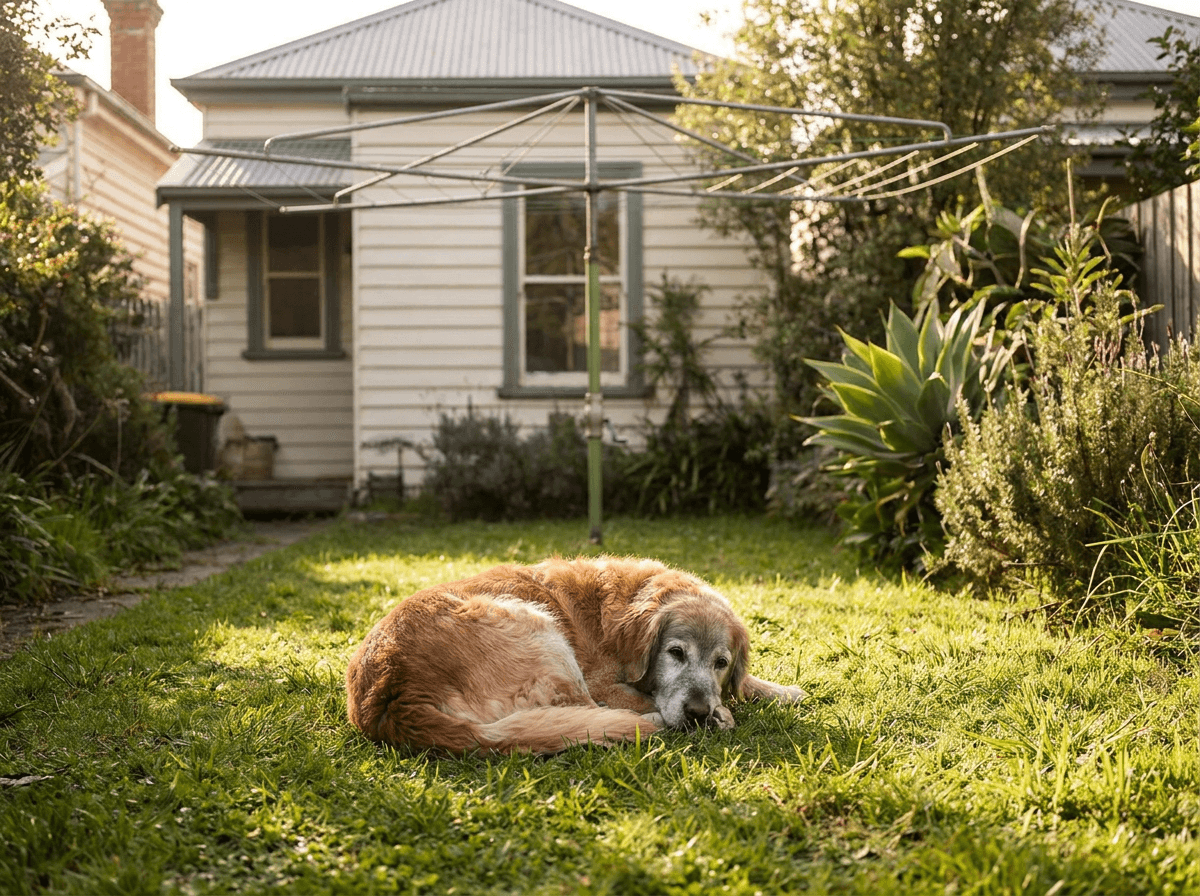
Older dogs hide pain well. It is one of the more difficult realities of caring for a senior dog: by the time the discomfort is obvious, it has often been present for weeks or months. Knowing what to look for early makes a real difference to your dog's comfort and quality of life.
*This post provides general information only. A veterinarian should examine your dog to diagnose pain or its underlying cause.*
Why Older Dogs Hide Pain
Dogs are instinctively wired to mask vulnerability. In the wild, showing weakness invites danger. That drive does not disappear in a family pet, even a fourteen-year-old labrador who has never spent a night outdoors.
Arthritis is the most common source of chronic pain in older dogs. The Australian Veterinary Association estimates that around 20 percent of dogs over one year old, and a much higher proportion of senior dogs, are affected by osteoarthritis (AVA, ava.com.au). Other common sources of pain in senior dogs include dental disease, intervertebral disc disease (IVDD), cancer, and chronic kidney disease.
Because dogs mask pain, the signs tend to be behavioural and positional rather than vocal. Most dogs do not yelp or whimper from chronic pain. They simply change what they do.
5 Signs of Pain in Older Dogs
1. Changes to Movement and Mobility
This is the most common and most overlooked sign. Watch specifically for:
- •Hesitation before jumping onto the couch or into the car
- •Stiffness in the first few minutes after waking, particularly in the morning
- •Slipping on hardwood or tiled floors that were never a problem before
- •A shortened stride on one or more legs
- •Difficulty rising from a lying-down position, sometimes taking two or three attempts
Stiffness that loosens up after 10 to 15 minutes of gentle movement points strongly toward arthritis. A dog that was always keen to join the morning walk but now stops after five minutes or lags behind is telling you something.
2. Changes to Sleeping Position or Resting Habits
A dog in chronic pain adjusts how and where it rests. You might notice your dog:
- •Curling tighter than usual, to protect a sore joint or abdomen
- •Stretching out flat more often, avoiding the pressure of a curled position
- •Choosing harder surfaces over soft beds (counterintuitive, but some dogs find it easier to rise from a firm surface)
- •Sleeping more overall, which can reflect the fatigue that accompanies chronic pain
- •Moving sleeping spots more often, searching for a position that is comfortable
Any shift in a dog's habitual resting pattern is worth noting, even if you cannot immediately explain it.
3. Reduced Appetite or Changes to Eating Behaviour
Pain suppresses appetite. A senior dog that has always eaten reliably but now approaches the bowl slowly, eats only half a meal, or walks away mid-meal may be experiencing pain rather than fussiness.
Dental disease is a particularly common culprit in dogs over eight years old. If your dog drops food, chews only on one side of the mouth, or avoids hard kibble, dental pain is a likely explanation. Dental disease is painful, progressive, and very treatable when caught.
Reduced appetite combined with weight loss in a senior dog always warrants a veterinary assessment. It can signal pain from several sources, including abdominal discomfort from organ disease.
4. Behavioural Changes, Irritability, or Withdrawal
Dog hiding pain is a real phenomenon. A dog that is uncomfortable will often withdraw from family interaction, seek quiet corners, or become less responsive to greetings it once welcomed enthusiastically.
Some dogs go the other direction and become irritable or snappy, particularly when touched near the painful area. A dog that flinches when you touch its lower back, or that growls when lifted, is communicating discomfort clearly. This is not aggression, it is pain communication.
Other behavioural changes associated with pain include:
- •Panting at rest, especially at night, when there is no obvious reason to be warm
- •Restlessness or an inability to settle
- •Increased vocalisation at night (more common in dogs with cognitive decline plus pain)
- •Reduced interest in play or interaction
- •A general flatness compared to their usual personality
These changes are easy to attribute to "just getting old." Some slowing down is normal ageing. But pain is not a normal or acceptable part of ageing, and it is treatable. The distinction matters.
5. Changes to Grooming and Coat Condition
Dogs in pain often stop grooming areas that are difficult or painful to reach. A dog with lower back or hip pain may develop matted or unkempt fur around the hindquarters, tail base, or rear legs simply because turning and grooming that area hurts.
The reverse also occurs. Some dogs over-groom a painful area, licking at a joint, a limb, or the abdomen obsessively. This is called pain-directed licking and can lead to raw or inflamed skin that may look like a skin problem on the surface.
Changes to coat condition in a senior dog, in either direction, are worth including in your observation notes when you call the vet.
How Many Signs Before You Call?
One sign on its own, observed once, may not mean much. Two or more signs together, or any single sign that persists across several days, warrant a proper assessment.
You do not need to wait until a dog is visibly limping or crying. By that point, the pain is significant and has likely been present in milder form for some time. Earlier assessment means earlier pain relief.
A Quality of Life Consultation at home gives you and the vet a structured way to evaluate what your dog is experiencing across several dimensions, not just pain but hunger, hydration, hygiene, happiness, and mobility. This uses the HHHHHMM framework developed by Dr. Alice Villalobos in 2004, a practical tool for families navigating chronic illness in senior dogs (Villalobos, 2004).
For dogs where the picture is clearer and the concern is pain management or chronic illness support, an At Home Consultation is a good starting point. The vet can assess your dog in their own environment, which often produces a more accurate picture of mobility and behaviour than a clinic setting.
Arthritis in Older Dogs: What to Expect
Arthritis (osteoarthritis) is a progressive condition. Cartilage in the joint breaks down over time, leading to bone-on-bone friction, inflammation, and chronic pain. It most commonly affects the hips, elbows, knees, and spine in dogs.
Common breeds with a higher predisposition to arthritis include golden retrievers, labrador retrievers, German shepherds, rottweilers, and dachshunds (who are additionally prone to IVDD). Large and giant breeds tend to develop arthritis earlier, often from middle age onward.
Arthritis cannot be cured, but it can be managed well. Pain relief options include meloxicam and other non-steroidal anti-inflammatory drugs (NSAIDs), gabapentin for nerve-adjacent pain, weight management, physical rehabilitation, and environmental modifications at home such as ramps, non-slip mats, and orthopaedic bedding. Your vet will advise on the right combination for your dog. Prescription medications should only be initiated and monitored by a veterinarian.
When to Call Us
If your senior dog is showing two or more of the signs above, or if something has simply felt "off" for a week or more, a vet visit at home is the right next step. The At Home Consultation is designed for exactly this kind of assessment, routine but specific, in the environment where your dog is most themselves. If you are also thinking about longer-term comfort planning, the Quality of Life Consultation offers a more structured review of where your dog is at right now.
When to call us
If this article is relevant to a decision you're weighing, here are the services that match.
Common questions
What are the signs of pain in older dogs?
The five most common signs of pain in older dogs are: changes to movement and mobility (stiffness, hesitation before jumping, slipping), changes to sleeping position or resting habits, reduced appetite or difficulty eating, behavioural changes such as withdrawal, irritability, or restlessness, and changes to grooming behaviour. Dogs do not typically whimper from chronic pain. The signs are subtle and build gradually, which is why they are easy to miss.
How can I tell if my dog has arthritis?
Arthritis dog signs typically include morning stiffness that eases after gentle movement, difficulty rising from the floor, reluctance to jump, a shortened stride, and slipping on smooth floors. These signs are most obvious in cold weather and after rest. Large breeds such as labradors, golden retrievers, and German shepherds are particularly susceptible. A vet examination is needed to confirm arthritis. X-rays taken at a clinic with imaging facilities can show joint changes, but a clinical examination often points strongly in that direction first.
Why is my dog hiding pain?
Dogs hide pain because of deep-rooted instinct. In the wild, showing vulnerability signals weakness to potential threats. This instinct persists in domestic dogs regardless of how safe their home environment is. A dog hiding pain will often reduce activity, withdraw from interaction, or shift sleeping positions rather than vocalise. This is why chronic pain in senior dogs often goes unnoticed until it is significant. Watching for behavioural changes, not just limping or yelping, gives you a much earlier warning.
How do I improve mobility for a senior dog in pain?
Senior dog mobility can be improved with a combination of veterinary pain management (such as NSAIDs like meloxicam, which must be prescribed by a vet), environmental modifications at home, and controlled gentle exercise. Practical home changes include non-slip mats on hardwood floors, ramps or steps to avoid jumping, orthopaedic bedding, and raising food and water bowls for dogs with neck or spine pain. Weight management is also important, extra body weight significantly increases joint load. A vet can build a specific plan based on your dog's diagnosis.
At what age is a dog considered senior?
A dog is generally considered senior from around seven years of age, though this varies significantly by size. Large and giant breeds such as great danes and Irish wolfhounds age faster and may be considered senior from five to six years. Small breeds such as chihuahuas and toy poodles often remain active until nine or ten before showing senior changes. The key is monitoring for changes in behaviour, mobility, and appetite rather than relying on age alone as a threshold for increased veterinary attention.
How often should a senior dog see the vet?
Most vets recommend that senior dogs have a check-up every six months rather than once a year. Conditions like arthritis, dental disease, chronic kidney disease, and heart disease progress gradually and are much easier to manage when caught early. An at-home visit is a practical option for senior dogs who find travel stressful or whose mobility makes clinic visits difficult. A regular At Home Consultation allows the vet to assess your dog in their own environment, which often gives a more accurate picture of how they are really moving and behaving day to day.
Sources
- Australian Veterinary Association: Arthritis in Pets, Prevalence statistics for osteoarthritis in dogs
- Villalobos, A. (2004). HHHHHMM Quality of Life Scale, Foundational quality-of-life framework referenced in the Quality of Life Consultation section
- Merck Veterinary Manual: Osteoarthritis in Small Animals, Clinical background on osteoarthritis presentation and management in dogs
We're Here When You Need Us
If you have questions about your pet's care or want to discuss your situation, please reach out. No pressure, no obligation.