Blog / End-of-Life Care
What Happens at a Home Euthanasia Visit | At Home Vetcare
What happens at home euthanasia? A calm, step-by-step guide to the visit, from arrival to aftercare, so your family knows what to expect.

Dr. Jina Song, DVM
What Happens at a Home Euthanasia Visit
A home euthanasia visit follows a calm, unhurried sequence. From the moment your vet arrives to the moment they leave, the visit is structured around your pet's comfort and your family's need for time. Most visits take around 60 minutes, and nothing moves faster than you are ready for.
Before the Vet Arrives
There is no single right way to prepare, but a few things tend to help families feel more settled.
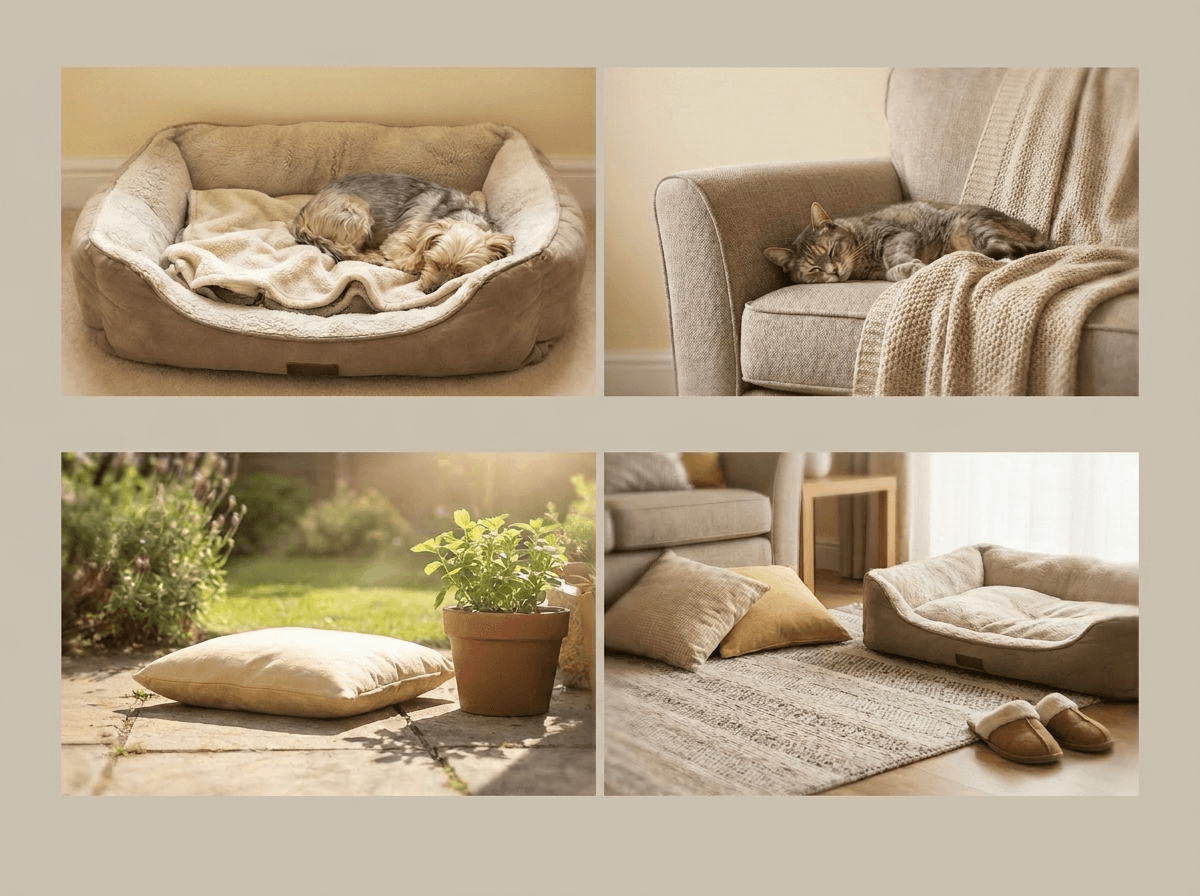
Choose a spot your pet already loves. A favourite couch, a patch of afternoon sun, their bed in the corner of the bedroom. The familiarity is the point. You do not need a special blanket or to tidy the house. Bring your pet to the space naturally, without any fuss.
Decide who you want present. Some families gather everyone, including children. Others prefer one or two quiet people. Both are completely appropriate. If you have other pets in the house, there is no rule about whether they should be in the room. Some owners find it meaningful; others prefer to keep them separate. Your vet can talk through what might feel right for your situation.
If you have already decided about aftercare (communal cremation, private cremation, or making your own arrangements), let your vet know beforehand. It removes one decision from the day itself.
When the Vet Arrives
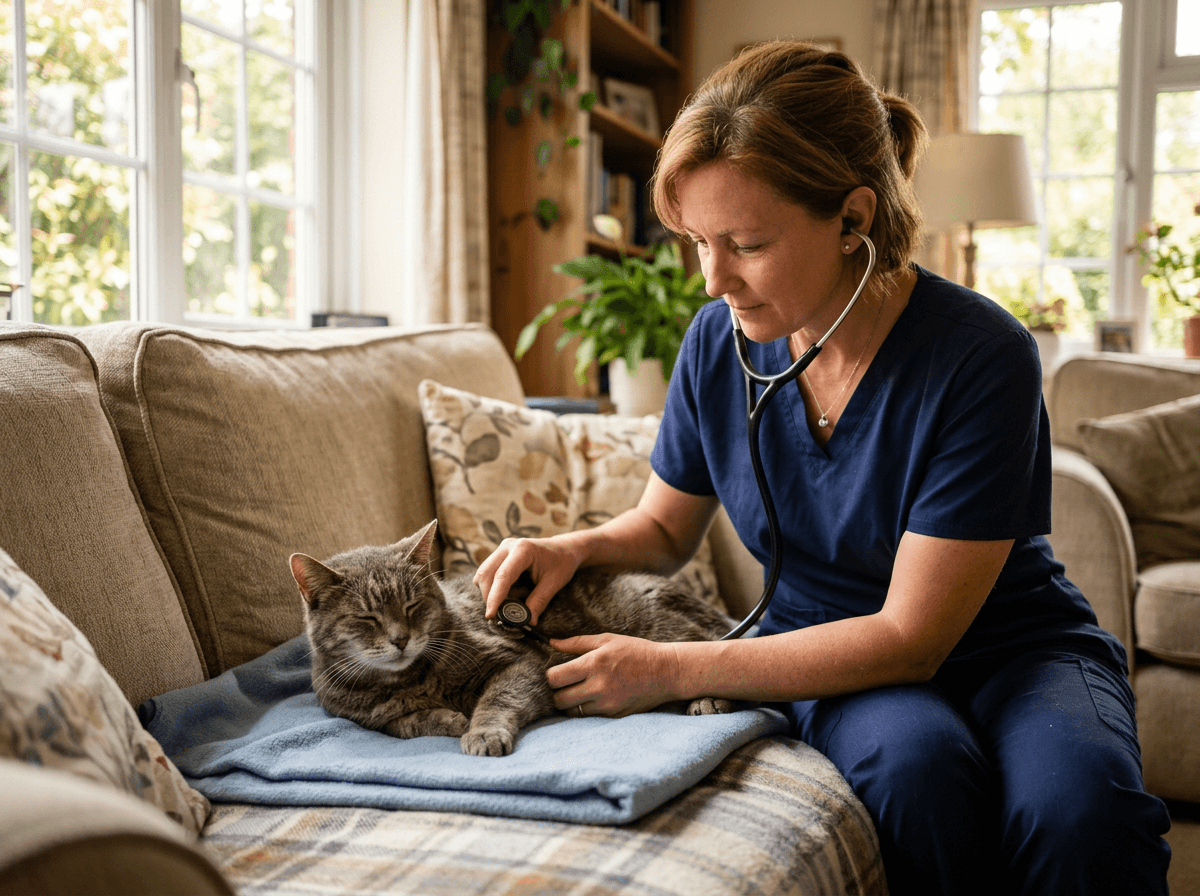
Your vet will arrive in a regular car, quietly and without fuss. The first few minutes are not clinical. There is time to talk, to show your vet where your pet likes to rest, and to ask any last questions.
If paperwork is needed, it is handled gently and quickly so the visit can focus on your pet.
Your vet will assess your pet briefly, checking their general comfort. This is not a full medical examination. It is a check to confirm the right sedation dosage and to see how your pet is feeling in the moment.
This is also the time to ask anything you have been wondering about the process. There are no questions that are too small or too difficult.
The Two-Stage Process
Home euthanasia in Melbourne with At Home Vetcare follows a two-stage approach, which is standard for compassionate in-home euthanasia.
Stage One: Sedation
Your vet gives a sedation injection, usually into the muscle of the back leg or scruff of the neck, depending on your pet's temperament. Most pets barely react to this. Within five to fifteen minutes, your pet becomes deeply relaxed and drowsy, then fully unconscious.
This stage is important. It means your pet is completely unaware before the final medication is given. There is no distress. You can sit with your pet, hold them, stroke them, and speak to them while they drift off. Many families find this the most meaningful part of the visit.
Stage Two: The Final Injection
Once your pet is fully sedated and unconscious, your vet gives the final injection. This is a concentrated anaesthetic agent (most commonly pentobarbital) that stops the heart within seconds. Your pet does not feel this.
Your vet will listen to confirm the heart has stopped, then give you confirmation when the process is complete. It is gentle and quiet.
Some normal physical changes happen in the minutes after passing: a final breath, a muscle twitch, eyes that remain open. Your vet will prepare you for these beforehand so nothing feels unexpected or alarming.
Afterwards: Taking Your Time
There is no rush for anything to happen after your pet passes. Your vet will not hurry you.
Many families want time alone in the room. Your vet will step out and give you as long as you need. Some families sit for a few minutes; others want half an hour or more. Both are completely normal.
Before leaving, your vet will take a paw print and a small fur clipping as keepsakes. If you have arranged cremation through At Home Vetcare's Aftercare service, your vet will coordinate collection with Celestials Pet Cremation Service. Private cremation includes the return of ashes within five to seven days, with a choice of vessel. Communal cremation is available from $195 if ashes being returned is not important to you.
Your vet will leave you with grief support resources before the visit ends.
What the Visit Feels Like
Families often say the visit was not what they feared. The clinical element is brief. The greater part of the hour is simply time with your pet, at home, surrounded by the things and people your pet knows.
The difference from a clinic visit is real and consistent: no waiting room, no unfamiliar smells, no anxiety response from your pet on the drive over. Senior dogs, cats with heart conditions, and animals with severe anxiety all tend to be noticeably calmer in their own space.
This does not make the loss any less. But it does change the texture of the experience in a way most families describe as a gift.
Pain Management and Comfort in the Final Days
If your pet is not yet at the point where euthanasia feels right, but you are thinking about it, a Quality of Life Consultation may be a useful next step. This is a 45 to 60-minute structured assessment ($179) that uses the HHHHHMM framework (Hurt, Hunger, Hydration, Hygiene, Happiness, Mobility, and More good days than bad), developed by Dr. Alice Villalobos in 2004, to help your family understand where your pet is right now.
The option to proceed to euthanasia on the same visit is always available if your family decides the time is right.
For pets living with serious illness where the goal has shifted from cure to comfort, Palliative Care visits can support quality of life over weeks or months before that final decision.
*This post contains general information about the home euthanasia process. Your vet will assess your individual pet and discuss any specific considerations at the visit.*
When to Call Us
If you would like to book a home euthanasia visit in Melbourne, or if you are not yet sure and want to talk it through first, the Home Euthanasia service page has full details and a booking form. You are also welcome to start with a Quality of Life Consultation if you need more time to decide.
When to call us
If this article is relevant to a decision you're weighing, here are the services that match.
Common questions
What happens during a home euthanasia visit?
A home euthanasia visit with At Home Vetcare takes approximately 60 minutes. Your vet arrives quietly at home, spends time getting to know your pet's space, then gives a sedation injection that makes your pet fully unconscious within five to fifteen minutes. Once your pet is deeply sedated, a final injection stops the heart within seconds. Afterwards, your vet takes a paw print and fur clipping, and can coordinate cremation if you have chosen aftercare. Nothing is rushed.
Is home euthanasia painful for my pet?
No. The two-stage process is specifically designed to ensure your pet is completely unconscious before the final injection is given. The sedation injection itself causes minimal discomfort, similar to a routine injection. By the time the final medication is administered, your pet is fully unaware. Most families report that their pet drifted off calmly during the sedation stage, often while being held or stroked.
How much does home euthanasia cost in Melbourne?
At Home Vetcare charges $449 for cats and dogs, and $399 for pocket animals including rabbits and guinea pigs. The price is flat regardless of your pet's weight, size, or the time of day. There are no after-hours surcharges. Cremation is arranged separately: communal cremation starts at $195, and private cremation (with ashes returned) starts at $280 for pocket pets and up to $500 for extra-large dogs.
Can I stay in the room during home euthanasia?
Yes, and most families do. You are welcome to hold your pet, lie down beside them, or simply sit close throughout the entire process. There is no requirement to leave the room at any stage. After your pet has passed, your vet will step out to give your family private time for as long as you need. Children and other family members are welcome if that feels right for your household.
How do I prepare my home for a euthanasia visit?
Choose a spot your pet already loves, a favourite couch, their bed, a sunny corner of the garden. You do not need to tidy the space or prepare anything special. Have fresh water available if you would like it for yourself. If you have decided on cremation or other aftercare, let your vet know beforehand so it can be arranged without adding decisions to the day. Everything else can be discussed when your vet arrives.
What happens to my pet's body after home euthanasia?
If you have arranged aftercare through At Home Vetcare, your vet coordinates collection with Celestials Pet Cremation Service before leaving. Communal cremation costs $195 (ashes are not returned). Private cremation costs $280 to $500 depending on size, with ashes returned within five to seven days along with a Certificate of Cremation and a choice of vessel. If you prefer to make your own arrangements, that is also completely fine. Your vet will discuss options at the visit.
Sources
- HHHHHMM Quality of Life Scale, Dr. Alice Villalobos, Framework for quality of life assessment referenced in the palliative care and QoL consultation sections
- CAETA (Companion Animal Euthanasia Training Academy), Professional certification body for in-home euthanasia; Dr. Jina Song is CAETA-certified
- IAAHPC (International Association for Animal Hospice and Palliative Care), Standards of practice for companion animal hospice and palliative care
We're Here When You Need Us
If you have questions about your pet's care or want to discuss your situation, please reach out. No pressure, no obligation.