Blog / Quality of Life
What Does a Quality of Life Consultation Involve? | At Home Vetcare
A quality of life consultation vet visit helps families assess a pet's comfort and dignity at home. Here's exactly what to expect from the 45-60 minute assessment.

Dr. Jina Song, DVM
What a Quality of Life Consultation Actually Involves
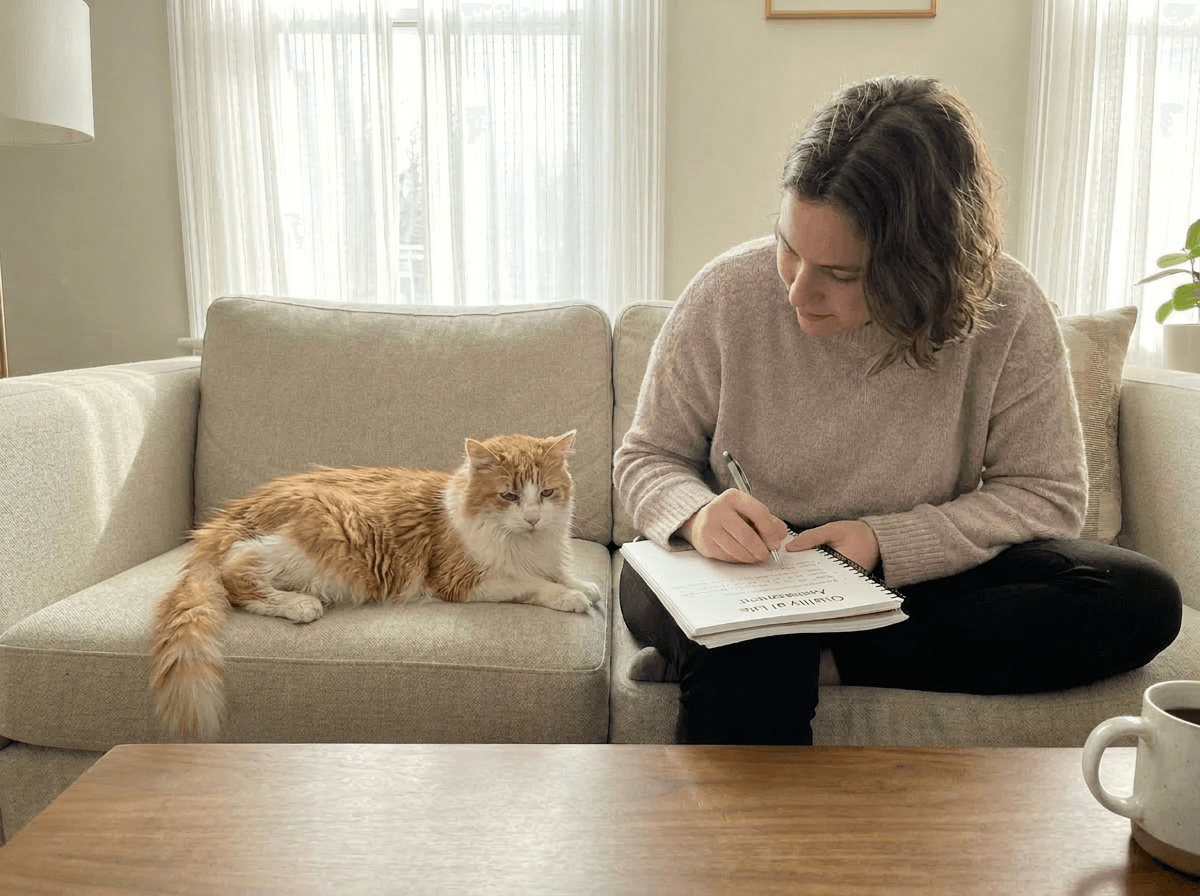
A quality of life consultation is a structured, 45-60 minute at-home assessment where a vet evaluates your pet's comfort, dignity, and daily experience using a validated clinical framework. It is not a euthanasia appointment. It is a conversation about where your pet is right now, and what the realistic options look like going forward.
Dr. Jina Song comes to your home, examines your pet in their own space, and works through the assessment with your family. By the end of the visit, you will have a written summary and a clearer sense of the path forward, whether that is continuing care, palliative care, or, if the family is ready, a peaceful passing on the same day.
The HHHHHMM Framework: How Vets Assess Pet Quality of Life
The clinical foundation of a vet quality of life assessment is the HHHHHMM framework, developed by Dr. Alice Villalobos in 2004. The acronym stands for seven domains that together describe a pet's daily experience:
- 1.Hurt : Is pain being managed effectively? Is the pet breathing comfortably?
- 2.Hunger : Is the pet eating enough to maintain body condition? Can they swallow without distress?
- 3.Hydration : Is the pet drinking adequately, or showing signs of dehydration?
- 4.Hygiene : Can the pet be kept clean and free from sores? Is grooming possible without causing pain?
- 5.Happiness : Does the pet show interest in life, interaction, toys, or favourite people?
- 6.Mobility : Can the pet move well enough to satisfy basic needs? Are they at risk of injury from falls?
- 7.More good days than bad : Across recent weeks, is the pet having more comfortable days than distressing ones?
Each domain is scored and considered in context of the pet's specific condition, age, and what matters most to your family. No single domain automatically determines the outcome. A dog with advanced mobility issues from intervertebral disc disease (IVDD) may still score well on happiness and hunger. A cat with chronic kidney disease (CKD) may be managing pain well but struggling significantly with hydration and hygiene. The framework gives structure to what is otherwise an overwhelming conversation.
*The HHHHHMM framework is attributed to Dr. Alice Villalobos, 2004, and is used widely in veterinary palliative and hospice care.*
What Happens During the Visit
Before Dr. Jina Arrives
You do not need to prepare paperwork or make any decisions in advance. If you have records from your regular vet, a summary of current medications, or a list of recent changes you have noticed, those are helpful. But the visit can proceed without them.
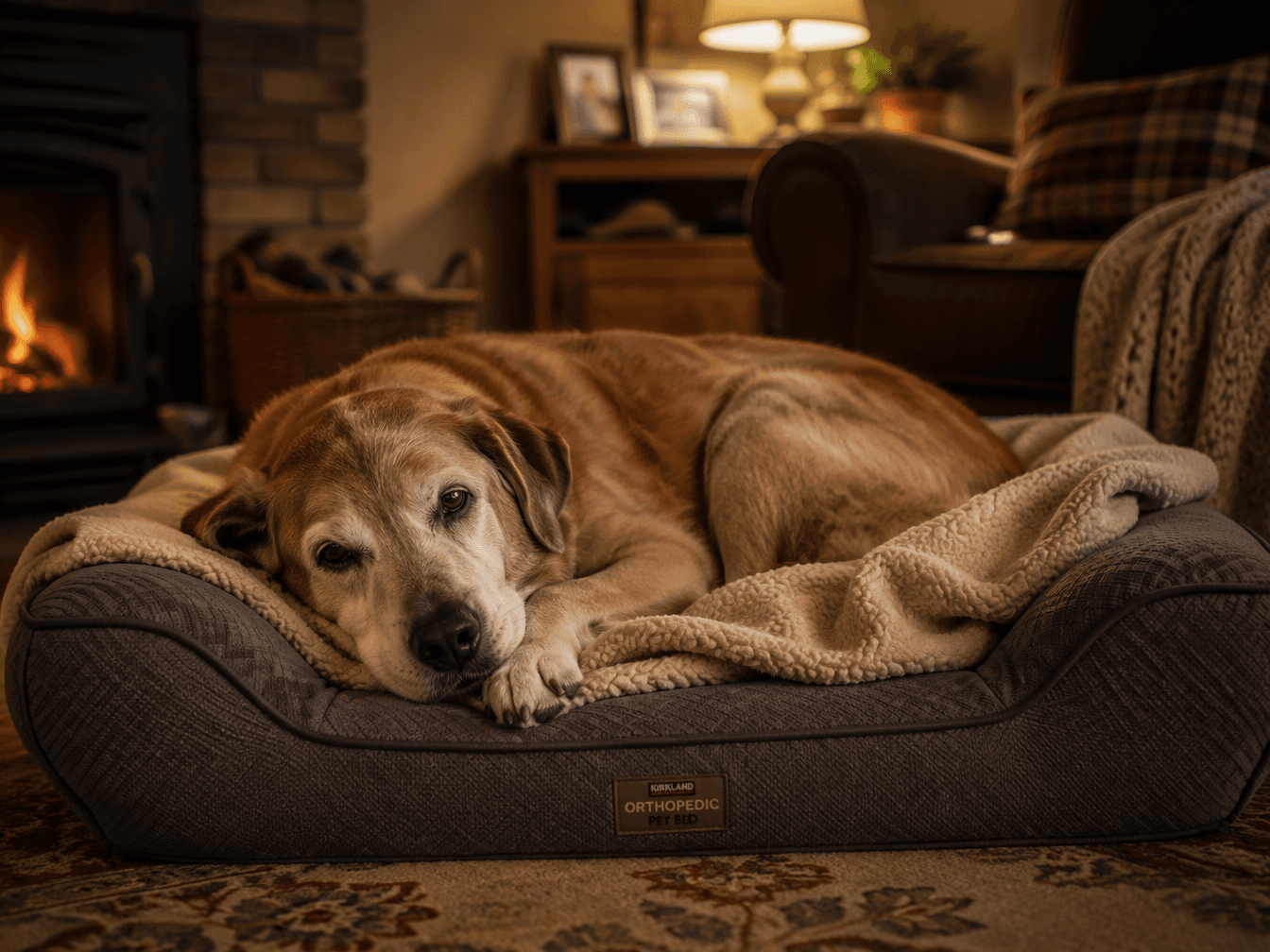
Choose a quiet room where your pet is comfortable. Many dogs and cats settle more easily in a familiar spot, a favourite bed, a sunny patch on the floor, a couch they have claimed for years. That familiarity is one of the reasons this assessment works better at home than in a clinic.
The Physical Examination
Dr. Jina begins with a hands-on physical examination. This covers body condition scoring, pain response, muscle mass, coat and skin condition, respiratory pattern, and mobility. For a senior golden retriever with hip dysplasia, this will include assessing how they rise, how they bear weight, and where they flinch. For a ragdoll with hyperthyroidism, it includes heart rate, muscle wasting, and hydration.
The examination is calm and unhurried. If your pet is distressed by handling, Dr. Jina will adapt. This is their home, not a clinic.
The Framework Assessment
With the physical findings in hand, Dr. Jina works through each of the seven HHHHHMM domains with you. This is a conversation, not a questionnaire. You know things a vet cannot observe in a single visit: whether your cat ate breakfast, whether your dog stopped greeting you at the door two weeks ago, whether the restlessness at night is new or has been building for months.
Those observations matter as much as the clinical findings. The assessment combines both.
The Written Summary
Before leaving, Dr. Jina provides a written summary of the assessment findings. This document covers:
- •Scores and observations across each HHHHHMM domain
- •Current condition and trajectory
- •Options going forward, with honest framing of each
- •Referral recommendations where relevant (to your regular vet or a clinic with surgical or imaging facilities)
This summary is yours to keep, share with family members who were not present, or send to your regular vet.
If the Family Decides Today Is the Day
Some families book a quality of life consultation already knowing, or strongly suspecting, that euthanasia is the right next step. They want the assessment to confirm that their instinct is correct, and to have a professional framework for a decision they have been carrying alone.
If, at the end of the assessment, the family decides they are ready, the visit can transition directly to a Home Euthanasia appointment on the same day. There is no extra travel fee, no rebooking, no waiting room. The cost of the quality of life consultation ($179) and euthanasia ($449 for cats and dogs) are each charged separately.
No family is ever pressured toward this outcome. The assessment is genuinely about where your pet is, not about steering you toward a particular decision.
Who Should Book a Quality of Life Consultation
This service is appropriate for any family who is uncertain about their pet's wellbeing and wants a structured, professional assessment. Common situations include:
- •A senior pet (typically dogs over 10, cats over 12) whose condition has visibly changed in recent months
- •A pet managing a chronic illness such as CKD, cardiac disease, Cushing's disease, or cancer in a maintenance phase
- •A pet whose pain medication no longer seems to be working well
- •A family who disagrees about whether it is time, and wants an independent clinical view
- •A pet with rapidly declining mobility, significant weight loss, or behavioural withdrawal
This is general information. A vet needs to examine your individual pet to make any clinical assessment. If your pet is in acute distress, contact an emergency clinic rather than booking a non-urgent consultation.
How a Home Assessment Differs from a Clinic Visit
A pet quality of life assessment conducted at home yields different information than one done in a clinic. In a clinic environment, many pets are visibly anxious: elevated heart rate, muscle tension, hiding behaviour, reluctance to move. These stress responses can mask pain, distort mobility assessment, and make it harder for a vet to observe normal behaviour.
At home, a dog with arthritis walks across their own floor the way they actually walk every day. A cat with CKD sits in their usual spot, behaving the way they usually behave. Dr. Jina can observe the environment too: whether the food bowl is being reached, whether the litter tray requires a step the cat can no longer manage comfortably, whether the dog's bedding shows signs of incontinence the family has not mentioned.
That environmental context is not available in a clinic. It often changes the picture significantly.
How to Assess Pet Quality of Life Between Visits
Families managing a pet with serious illness often benefit from tracking quality of life between formal assessments. A simple approach is to note, each day, whether the day was mostly good or mostly difficult. Over two weeks, a pattern becomes visible.
Some specific things worth tracking:
- •Appetite: Did the pet eat their usual amount? Did they show interest in food?
- •Movement: Did the pet get up voluntarily? Did they seek out company?
- •Comfort at rest: Did the pet settle without panting, restlessness, or repeated repositioning?
- •Engagement: Did the pet respond to familiar people, sounds, or routines?
- •Hygiene: Was the pet able to keep themselves clean, or did they require significant help?
Bringing these notes to a Quality of Life Consultation gives Dr. Jina a much richer picture than a single visit can provide alone. A pet who presents well on a given morning may have had eight difficult nights in a row. That history matters.
When to Call Us
If you are watching your pet and wondering whether it is time for a formal assessment, that uncertainty itself is a reasonable prompt to book. The Quality of Life Consultation is $179 and takes 45-60 minutes at your home across metropolitan Melbourne, including Brunswick, Hawthorn, South Yarra, Doncaster, and Sandringham.
If you are not yet ready for an in-person visit and want to talk through what you are seeing, a Telehealth appointment is available from $99 Australia-wide.
When to call us
If this article is relevant to a decision you're weighing, here are the services that match.
Common questions
What does a quality of life consultation vet visit cost?
A Quality of Life Consultation with At Home Vetcare costs $179. The visit runs 45-60 minutes and takes place at your home anywhere across metropolitan Melbourne. If the family decides to proceed with euthanasia on the same day, the Home Euthanasia fee of $449 (for cats and dogs) is charged separately. There is no additional call-out fee for transitioning between the two.
How does a vet assess pet quality of life?
Vets use the HHHHHMM framework, developed by Dr. Alice Villalobos in 2004, to assess pet quality of life across seven domains: Hurt, Hunger, Hydration, Hygiene, Happiness, Mobility, and More good days than bad. Each domain is scored and considered alongside a physical examination and the owner's own observations about the pet's recent behaviour and daily experience. No single domain determines the outcome on its own.
Is a quality of life consultation the same as booking euthanasia?
No. A quality of life consultation is an assessment appointment, not an euthanasia appointment. Its purpose is to evaluate your pet's current comfort and trajectory and give your family a clear clinical picture of the options. Some families proceed to euthanasia on the same day if they feel ready after the assessment. Others leave with a plan for continued or palliative care. The decision remains entirely with the family.
How do I know if my pet needs a quality of life assessment?
Common reasons to book include: a senior pet whose condition has visibly changed, a pet managing chronic kidney disease, heart disease, or cancer, a pet whose pain medication no longer seems effective, significant weight loss or withdrawal from daily routines, or family disagreement about whether it is time. If you are uncertain and want a professional view, that uncertainty alone is a reasonable reason to book. This is general information; your vet needs to examine your individual pet to make any clinical determination.
Why is a home quality of life assessment better than a clinic visit?
A home assessment captures how your pet actually behaves day to day, not how they behave under clinic stress. In a familiar environment, mobility assessment is more accurate, pain responses are less masked by anxiety, and Dr. Jina can observe environmental factors like food bowl placement, litter tray access, and bedding condition that a clinic visit cannot reveal. For senior pets and those with serious illness, this context often meaningfully changes the clinical picture.
What happens at the end of a quality of life consultation?
Dr. Jina provides a written summary covering findings across each HHHHHMM domain, the pet's current condition and trajectory, and options going forward with honest framing. You can share this with family members who were not present or forward it to your regular vet. If the family chooses to proceed with euthanasia on the same visit, the appointment transitions directly without any rebooking or additional travel fee.
Sources
- HHHHHMM Quality of Life Scale, Dr. Alice Villalobos, Clinical framework underpinning the quality of life assessment structure described in this post
- IAAHPC (International Association for Animal Hospice and Palliative Care), Standards for animal hospice and palliative care referenced in the palliative care section
- CAETA (Companion Animal Euthanasia Training Academy), Certification body for in-home euthanasia; credential reference for Dr. Jina Song
We're Here When You Need Us
If you have questions about your pet's care or want to discuss your situation, please reach out. No pressure, no obligation.