Blog / Palliative Care
Keeping a Dying Dog Comfortable at Home
Keeping a dying dog comfortable at home means managing pain, rest, nutrition, and dignity. Here is what to do, and when to call a vet.

Dr. Jina Song, DVM
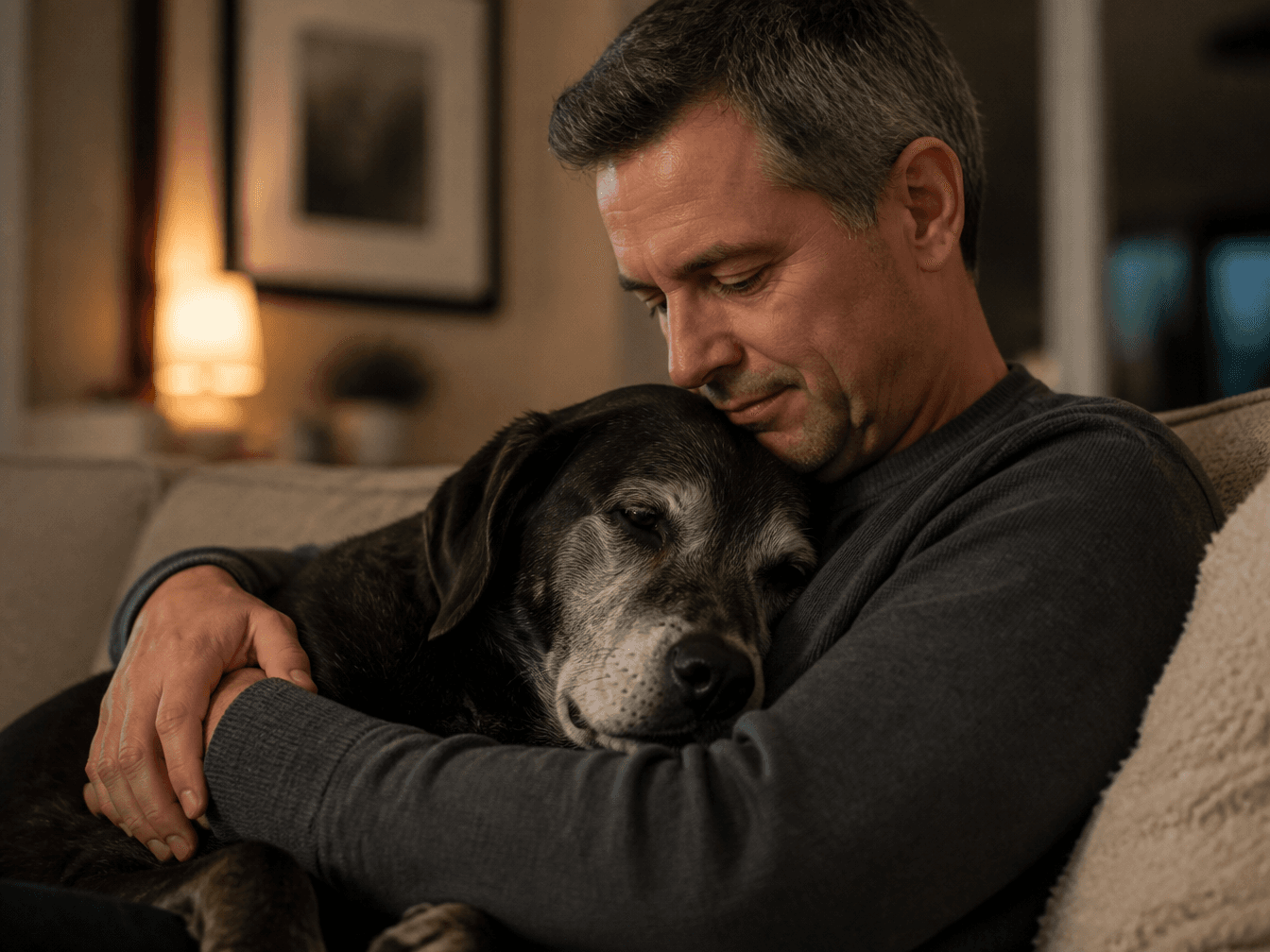
Keeping a dying dog comfortable at home is something most families can do well, with the right guidance. The goal is not to cure, but to reduce pain, preserve dignity, and make the time your dog has left as peaceful as possible.
What "End of Life Comfort Care" Actually Means
Dog end of life comfort care is a shift in focus. Instead of treating the underlying disease, the aim becomes managing symptoms, maintaining quality of life, and preventing suffering. Veterinarians sometimes call this palliative care or hospice care, and it can last days, weeks, or longer depending on your dog's condition.
Comfort care does not mean doing nothing. It means making deliberate choices about what helps versus what prolongs discomfort. A dog with terminal cancer or advanced kidney disease may still have good hours and good days. Your job, with your vet's support, is to protect those moments.
This is general information. Every dog's situation is different, and a vet should examine your dog before you make decisions about pain relief or care changes.
Setting Up a Comfortable Space at Home
The physical environment matters more than most people expect. A dog who is weak, in pain, or confused needs a space that removes obstacles rather than adding them.
Bedding and warmth
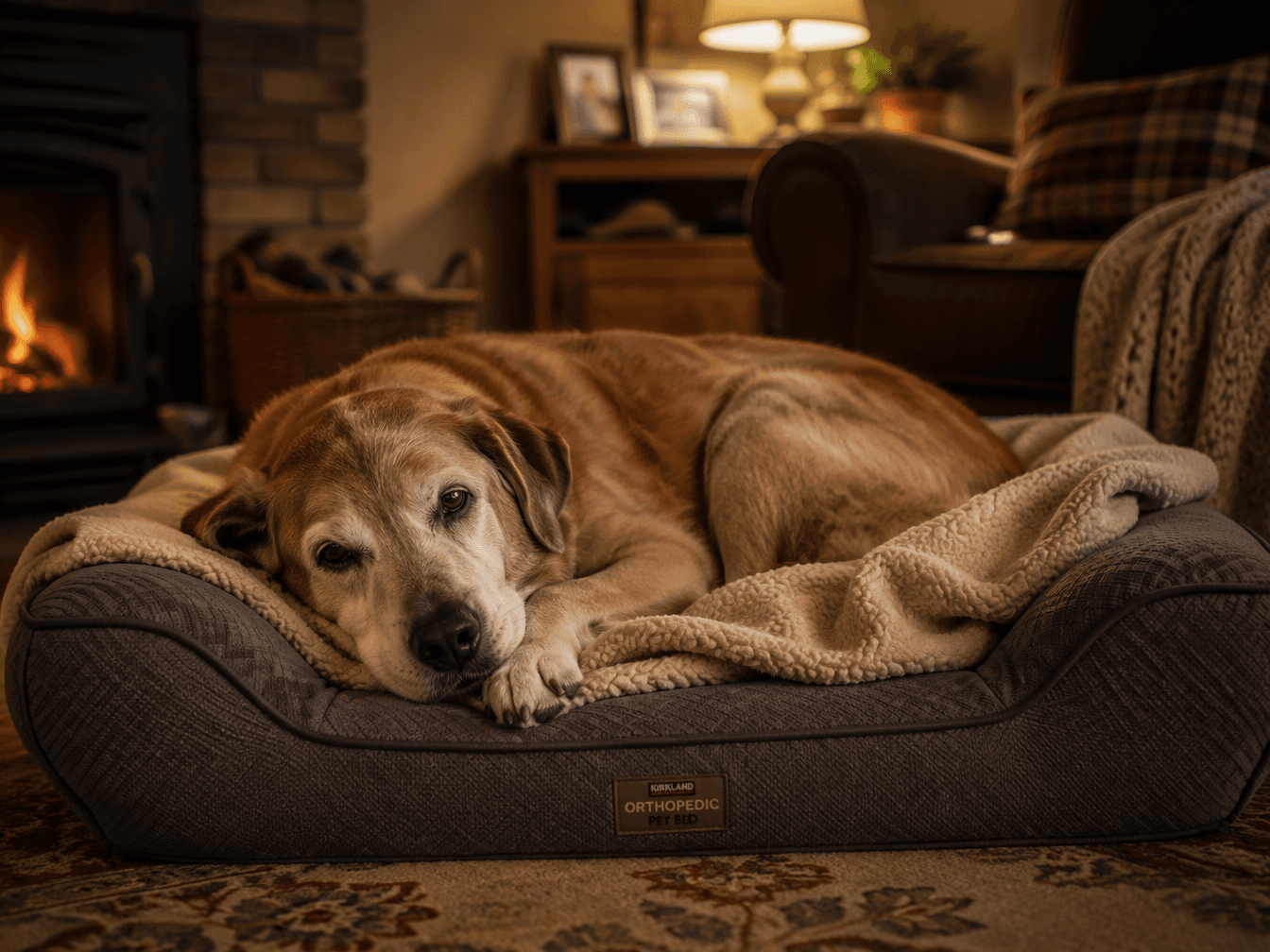
Use a thick, orthopaedic foam bed or a memory foam mattress topper. Dogs with arthritis, muscle wasting, or nerve pain develop pressure sores quickly on thin or hard surfaces. Place the bed low to the ground so your dog does not have to step up. If your dog is incontinent, a waterproof cover under a soft fleece layer keeps them dry without irritating their skin.
Keep the space warm but not hot. Dying dogs often struggle to regulate their body temperature. A room between 20 and 23 degrees Celsius is usually comfortable. Avoid placing the bed near a cold draught or directly under an air conditioning vent.
Accessibility and quiet
Move water and food to within easy reach. If your dog is reluctant to lift their head, a slightly elevated bowl reduces strain. Keep the bed in a room where your family naturally spends time. Dogs, even very ill ones, take comfort from proximity to the people they know.
Reduce noise and foot traffic where possible. Visitors, excited children, and loud environments are tiring for a dog whose energy reserves are already depleted.
Pain Relief for a Dying Dog
Pain management is the single most important part of end of life comfort care. Dogs instinctively hide pain, so by the time symptoms are obvious, discomfort may already be significant.
Signs your dog may be in pain
- •Panting at rest when the room is not hot
- •Reluctance to lie down, or constantly shifting position
- •Guarding a body part (pulling away when touched)
- •Changes to facial expression, a tight muzzle, flattened ears, or a furrowed brow
- •Reduced appetite with no other obvious cause
- •Whimpering or vocalising at night
- •Withdrawing from contact they used to enjoy
If your dog shows two or more of these signs, they need a pain assessment from a vet before anything else.
What pain relief looks like
Vets commonly use non-steroidal anti-inflammatory drugs (NSAIDs) such as meloxicam for dogs with musculoskeletal pain, and gabapentin for nerve pain or pain that is not fully controlled by NSAIDs alone. Palliative-stage dogs sometimes receive combinations of both. These are prescription medications. Do not give your dog human pain relief. Ibuprofen and paracetamol can be toxic to dogs; even a small dose could cause organ failure.
If your dog is already on medication, contact your vet if you feel it is no longer controlling pain well. Doses are often adjusted as a disease progresses. Your vet may also discuss appetite stimulants, anti-nausea medications, or corticosteroids depending on the underlying condition.
For ongoing pain management at home in Melbourne, Palliative Care with At Home Vetcare is designed exactly for this situation. A vet visits you, assesses your dog's comfort, and adjusts the plan without you needing to stress your dog with a car trip to a clinic.
Nutrition, Hydration, and Hand Feeding
A dying dog's appetite usually decreases. This is normal and does not need to be forced. However, hydration matters more than most owners realise.
Encouraging water intake
Offer fresh water frequently, every two to three hours if your dog will accept it. Some dogs respond better to a water fountain than a static bowl. Others will drink from a dropper or syringe if they are too weak to move to the bowl. Wet food, low-sodium chicken broth (no onion or garlic), or ice chips can also add moisture.
Signs of dehydration include dry or tacky gums, skin that does not spring back when gently pinched, and a sunken appearance around the eyes. If your dog is not drinking and these signs are present, contact your vet.
Adjusting food
Offer smaller amounts more frequently rather than full meals. Soft, warm food is often more appealing than dry kibble for a dog who is nauseous or has mouth pain. Hand feeding, placing small pieces directly in front of your dog, can make eating easier when their energy is low.
Do not force eat. Forcing food into a dog who is actively refusing it causes distress. If your dog has stopped eating entirely for more than 24 to 48 hours, speak to your vet.
Hygiene and Physical Care
A dog who is weak or incontinent cannot clean themselves. Gentle, consistent hygiene care prevents skin breakdown and keeps your dog comfortable.
- •Wipe your dog gently with warm, damp cloths after any urination or soiling. Pay attention to skin folds, groin, and under the tail.
- •Trim fur around the hindquarters if it is trapping moisture.
- •Keep nails short to prevent slipping on smooth floors.
- •Check for pressure sores (red, raw, or broken skin) under the elbows, hips, and sternum. If you notice these, add more padding and contact your vet.
- •Brush your dog gently if they have always enjoyed it. For many dogs this is calming, not just practical.
Emotional Comfort and Connection
Your presence is a form of care. Dogs in decline often become more attached, seeking contact they may not have wanted before. Sitting close, speaking quietly, and gentle stroking around the ears and shoulders (avoiding painful areas) all contribute to your dog's sense of safety.
Maintain a gentle routine where possible. Familiar smells, their usual blanket, the sounds of your household, these anchors matter to a dog whose world is becoming smaller.
If your dog has always enjoyed short walks, a slow five-minute walk around the garden on a good day is still valuable, provided they are not in obvious discomfort. Follow your dog's lead. If they stop or sit down, that is the walk done.
Dog Hospice Care at Home: When to Reassess
Dog hospice care at home is not a single decision. It is a process that requires regular reassessment. Every few days, ask yourself:
- 1.Is my dog having more comfortable hours than uncomfortable ones?
- 2.Is my dog still showing interest in the people or things they love?
- 3.Am I managing their physical needs without causing distress?
- 4.Has anything changed, appetite, breathing, mobility, that suggests their condition has shifted?
The HHHHHMM framework, developed by Dr. Alice Villalobos in 2004, offers a structured way to score your dog's quality of life across seven dimensions: Hurt, Hunger, Hydration, Hygiene, Happiness, Mobility, and More good days than bad. Ask your vet to walk you through it, or book a Quality of Life Consultation with At Home Vetcare, where a vet will assess your dog against this framework at home and give you a written summary.
If pain is becoming harder to control, if your dog has stopped eating and drinking entirely, or if they can no longer rise or change position without help, it may be time to discuss the next step. That is not failure. That is a decision made from care.
When to Call Us
If you are managing your dog's comfort at home and feel uncertain whether their pain is controlled, or whether now might be the time to consider euthanasia, At Home Vetcare can help. Our Palliative Care service supports families through exactly this stage. If you feel the time may have come, a Quality of Life Consultation gives you and your family a calm, unhurried space to assess where your dog is and what the right next step looks like.
When to call us
If this article is relevant to a decision you're weighing, here are the services that match.
Common questions
How do I keep my dying dog comfortable at home?
Set up a thick, low orthopaedic bed in a warm, quiet room. Keep water and soft food within easy reach. Ask your vet about prescription pain relief such as meloxicam or gabapentin. Check your dog's skin daily for pressure sores. Offer gentle physical contact and maintain a calm routine. Reassess comfort every few days by asking whether your dog is having more good hours than bad ones. If you are unsure whether pain is controlled, a vet visit at home is the most straightforward next step.
What are signs a dying dog is in pain?
Dogs hide pain instinctively, but several signs suggest discomfort: panting at rest when the room is not hot, constantly shifting position or reluctance to lie down, guarding a body part, a tight or tense facial expression with flattened ears, reduced appetite, whimpering at night, and withdrawing from contact. Any two of these signs together warrant a pain assessment from a vet. Do not wait for obvious distress before raising the concern.
Can I give my dog human pain relief at home?
No. Ibuprofen, paracetamol, and aspirin are all toxic to dogs. Even a single human-dose tablet can cause kidney failure, gastrointestinal bleeding, or liver damage. Pain relief for dogs requires a veterinary prescription. Commonly used medications include meloxicam (an NSAID) and gabapentin (for nerve pain). If your dog's current medication no longer seems to be controlling pain, contact your vet to discuss adjusting the dose or adding a second medication.
What is dog hospice care at home?
Dog hospice care at home is ongoing comfort-focused veterinary support for a dog living with a terminal or serious progressive illness. The goal is not to cure the disease but to manage pain, maintain quality of life, and help families make informed decisions over time. It typically involves a palliative care plan from a vet, regular reassessment, and adjustments to medication and physical care as the dog's condition changes. At Home Vetcare's Palliative Care service provides this support with regular home visits across metropolitan Melbourne.
How do I know if it is time to consider euthanasia?
The HHHHHMM framework, developed by Dr. Alice Villalobos in 2004, helps families evaluate quality of life across seven dimensions: Hurt, Hunger, Hydration, Hygiene, Happiness, Mobility, and More good days than bad. When pain can no longer be controlled, when your dog has stopped eating and drinking for more than 48 hours, or when they cannot rise or reposition without help, these are important signals. A Quality of Life Consultation with a vet at home gives you a structured, unhurried assessment and a written summary to support your decision.
How much does palliative care for a dog at home cost in Melbourne?
At Home Vetcare's Palliative Care service starts from $179 per visit. A Quality of Life Consultation, which uses the HHHHHMM framework and includes a written assessment, is also $179. Home Euthanasia, if the family decides the time has come, is $449 for cats and dogs, with no surcharge for weight, time of day, or after-hours visits. Aftercare through Celestials Pet Cremation starts at $195 for communal cremation and from $280 for private cremation.
Sources
- HHHHHMM Quality of Life Scale, Dr. Alice Villalobos, Framework for assessing quality of life in end-of-life dogs, referenced and paraphrased
- Merck Veterinary Manual: Pain Recognition and Assessment, Clinical basis for pain signs in dogs
- IAAHPC: Animal Hospice and Palliative Care Guidelines, Framework for home hospice care approach and goals
- AVA: Companion Animal Pain Management, Guidance on NSAID and gabapentin use in palliative dogs
We're Here When You Need Us
If you have questions about your pet's care or want to discuss your situation, please reach out. No pressure, no obligation.