
Blog / Palliative Care
What Is Pet Palliative Care, and When Does Your Pet Need It?
Pet palliative care focuses on comfort and quality of life when a cure is no longer the goal. Learn when it helps and how it works at home in Melbourne.

Dr. Jina Song, DVM
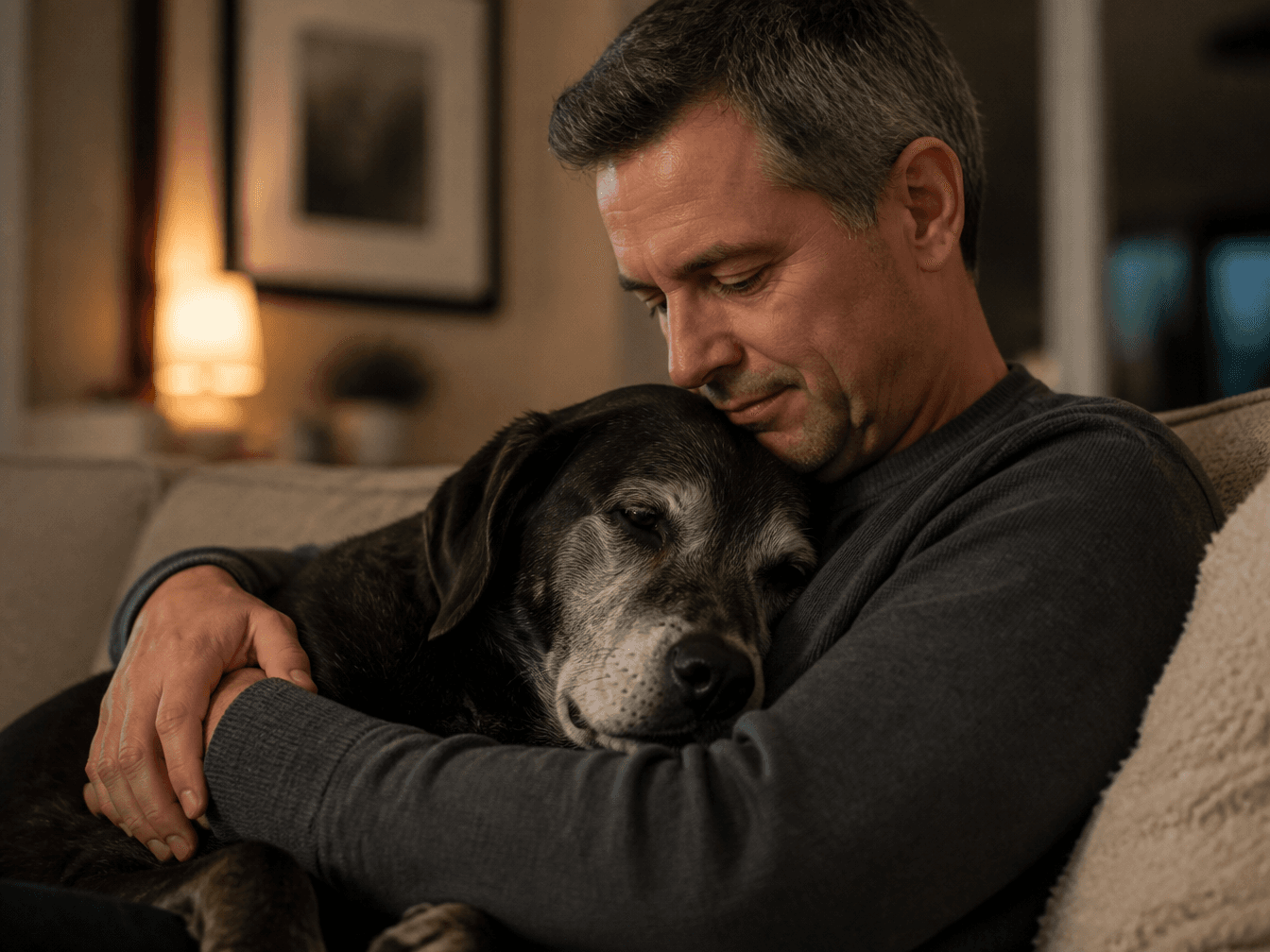
Pet palliative care is specialised veterinary support that prioritises comfort and quality of life over curative treatment. It is not giving up. It is a deliberate, structured shift in goals, one that often allows pets to live better for longer, and helps families feel confident they are doing right by their animal.
This post explains what palliative care involves, which conditions typically call for it, and how to know when the time has come to have that conversation with your vet.
*This post contains general information only. Your vet should examine your pet before any care decisions are made.*
What Pet Palliative Care Actually Is
Pet palliative care is a veterinary approach that manages pain, discomfort, and declining function in animals living with serious or chronic illness, where curing the underlying disease is no longer realistic or is not the owner's chosen path.
The goal is not to extend life at any cost. The goal is to maintain the best possible quality of life for as long as that is achievable, and to support the family through the process.
Palliative care for pets can include:
- •Pain management: medications such as meloxicam or gabapentin, prescribed by your vet and adjusted over time as the condition progresses
- •Mobility support: guidance on ramps, non-slip mats, orthopaedic bedding, and gentle assisted movement
- •Nutritional adjustments: modified diets for pets with chronic kidney disease (CKD), cardiac disease, or cancer
- •Symptom control: anti-nausea medication, appetite stimulants, fluid support where appropriate
- •Comfort planning: environmental changes to reduce stress, maintain hygiene, and preserve dignity at home
- •Family support: regular check-ins, honest conversations about what is changing, and guidance on quality-of-life assessment
Palliative care is not curative surgery or emergency intervention aimed at fixing the underlying disease, though a vet may still refer your pet to a hospital for a procedure, such as removing a bleeding mass, if that procedure itself relieves symptoms; this isn't something we do at your home. Day to day, it is calm and ongoing, centred entirely on the animal's comfort.
Palliative Care for Dogs: Which Conditions Prompt It
Palliative care for dogs is most commonly introduced when a dog is living with a condition that cannot be cured but can be managed. Common triggers include:
- •Degenerative joint disease and severe hip dysplasia: especially in older golden retrievers, German shepherds, and Labrador retrievers, where mobility is progressively restricted
- •Chronic kidney disease (CKD): a gradual, manageable decline where diet, hydration, and nausea control make a significant difference to daily comfort
- •Congestive heart failure: dogs in the later stages of cardiac disease often benefit from palliative management rather than repeated intervention
- •Cancer in the maintenance or advanced phase: where the oncology team has moved focus from treatment to comfort, or where the family has elected not to pursue chemotherapy or surgery
- •Canine cognitive dysfunction: the dog equivalent of dementia, where the aim is to reduce disorientation and support the dog's sense of safety
- •Intervertebral disc disease (IVDD): in cases where surgery is not appropriate, pain management and physical support become the focus
- •Spinal or neurological decline: progressive conditions in dachshunds, basset hounds, and other chondrodystrophic breeds
For dogs, early palliative support, introduced before a crisis point, tends to produce the best outcomes. Waiting until a dog is clearly suffering means weeks or months of unnecessary discomfort that could have been managed.
Palliative Care for Cats: A Different Picture
Palliative care for cats follows the same principles but presents differently in practice, largely because cats are expert concealers of pain and decline.
Conditions that commonly lead to palliative care in cats include:
- •Chronic kidney disease: the most common serious illness in senior cats, particularly in domestic shorthairs and ragdolls over ten years old. Careful dietary management and fluid support can maintain quality of life for months to years.
- •Hyperthyroidism (where treatment has reached its limits or the family has chosen comfort-only care)
- •Hypertrophic cardiomyopathy (HCM): a common cardiac condition in cats, manageable with medication until quality of life can no longer be sustained
- •Feline infectious peritonitis (FIP): in cases where treatment access is limited or the disease is advanced
- •Intestinal lymphoma: a common feline cancer where prednisone and diet modification can maintain reasonable quality of life
- •Oral squamous cell carcinoma: aggressive and often untreatable, but pain management and soft-food diets can meaningfully extend comfortable life
Because cats hide discomfort so effectively, palliative care at home, in a familiar environment, often reveals more about how a cat is actually doing than a clinic visit would. The cat is not in fight-or-flight mode. The vet can observe natural behaviour.
When to Consider Palliative Care: Practical Signals
There is no single moment when palliative care begins. It is more a gradual shift in conversation and approach. These are the signals that suggest it is time to raise it with your vet:
- 1.A specialist or your regular vet has said the condition is not curable, only manageable
- 2.A vet has recommended a treatment option, such as surgery or chemotherapy, and you have decided not to pursue it
- 3.You are noticing more bad days than good ones, and you are not sure if what you are doing is enough
- 4.Your pet is taking multiple medications but you have no clear plan for what comes next
- 5.You are beginning to think about euthanasia but feel it is not time yet, and you want to understand your options in between
- 6.Your regular vet visit is focused entirely on managing symptoms, with no treatment plan aimed at resolution
If any of these apply, a Quality of Life Consultation is often the right first step. It gives you a structured assessment of where your pet sits right now, using the HHHHHMM framework (Hurt, Hunger, Hydration, Hygiene, Happiness, Mobility, and More good days than bad), developed by Dr. Alice Villalobos in 2004 to help families and vets evaluate daily experience in a consistent, honest way.
How End-of-Life Pet Care at Home Works
End-of-life pet care at home, including palliative care, is almost always better for the animal than a clinic-based equivalent, for one simple reason: home is where the animal is least stressed.
A cat with a serious illness who spends three hours in a carrier getting to a clinic and back is not having a good day. A dog with advanced hip dysplasia walking across a cold clinic floor is already in more discomfort before the visit has started.
At home, the vet can:
- •Observe the animal in its actual environment (how does it get up from its bed? Does it reach the water bowl? Does it interact with the family?)
- •Speak to the whole family, including children, without managing clinic time pressure
- •Adjust care plans based on real behaviour, not clinic-visit behaviour
- •Assess the home for modifications that could extend comfort (ramp placement, litter box accessibility, bedding position)
At Home Vetcare's Palliative Care service starts from $179 and is structured as ongoing support, not a one-off appointment. That means a relationship with your vet over the arc of your pet's decline, not a series of disconnected visits.
Palliative Care Is Not the Same as Euthanasia
This is the most common misconception families bring to a first palliative care conversation.
Palliative care often begins months, sometimes well over a year, before euthanasia becomes the right choice. Many pets receive palliative support and maintain a genuinely good quality of life throughout. The point where palliative care transitions to end-of-life decisions is different for every animal.
When that point does come, a Quality of Life Consultation or an established palliative relationship with your vet means you are not making that decision in a vacuum. You have data, observations, and a vet who knows your pet. That context makes one of the hardest decisions a pet owner faces more grounded and less frightening.
For families who reach that point, Home Euthanasia is available at $449 for cats and dogs, in the same familiar environment where palliative care has been delivered. Many families find continuity of place meaningful.
When to Call Us
If your pet has a serious or chronic diagnosis and you want to understand what comfort-focused care could look like, our Palliative Care service is the right starting point. If you are further along and need help assessing quality of life right now, the Quality of Life Consultation gives you a structured, written assessment within a single visit.
When to call us
If this article is relevant to a decision you're weighing, here are the services that match.
Common questions
What is pet palliative care?
Pet palliative care is a veterinary approach focused on managing pain, discomfort, and declining function in animals living with serious or chronic illness, where curing the disease is no longer realistic or is not the chosen path. It includes pain medication (such as meloxicam or gabapentin), mobility support, nutritional adjustments, symptom control, and regular quality-of-life monitoring. The goal is to maintain the best possible daily experience for as long as that is achievable, not to extend life at any cost. Palliative care is a deliberate, structured decision, not a passive one.
When should I consider palliative care for my dog or cat?
Consider palliative care when a vet has told you your pet's condition is manageable but not curable, when you have decided not to pursue surgery or chemotherapy, or when you are noticing more bad days than good ones. Other signals include a symptom-management focus at regular vet visits, your pet taking multiple medications with no resolution plan, or when you are beginning to think about euthanasia but feel it is not yet the right time. Earlier introduction of palliative care, before a crisis point, consistently produces better outcomes for the animal.
Is palliative care the same as euthanasia?
No. Palliative care often begins months or more than a year before euthanasia becomes the right choice. Many pets receive palliative support and maintain a genuinely good quality of life throughout that period. Palliative care is about comfort and dignity while the animal can still experience good days. Euthanasia becomes the consideration when those good days are no longer reliably achievable. Having an established palliative relationship with your vet means that if and when the time comes, the decision is made with real information rather than in a moment of crisis.
What conditions commonly need palliative care for cats?
The most common conditions prompting palliative care for cats include chronic kidney disease (particularly in domestic shorthairs and ragdolls over ten years old), hypertrophic cardiomyopathy (HCM), hyperthyroidism in late-stage management, intestinal lymphoma, and oral squamous cell carcinoma. Feline infectious peritonitis (FIP) may also be managed palliatively in advanced cases. Because cats conceal pain and decline so effectively, palliative care at home, where the cat behaves naturally, often gives a more accurate picture of daily quality of life than a clinic assessment would.
How much does palliative care for pets cost in Melbourne?
At Home Vetcare's Palliative Care service starts from $179 per visit. This covers ongoing comfort care for pets living with serious or chronic illness, including pain management planning, mobility assessment, symptom control, and care plan adjustment over time. A Quality of Life Consultation, which provides a structured HHHHHMM framework assessment and written summary, is also $179 and is a common starting point for families new to palliative care. Home Euthanasia, if and when that becomes the right step, is $449 for cats and dogs, with no after-hours or weight-based surcharges.
Why is palliative care better done at home?
Home is where an animal is least stressed and most itself. A cat with chronic kidney disease spending several hours in a carrier reaching a clinic is not giving the vet an accurate picture of its daily experience. A dog with severe hip dysplasia or degenerative joint disease walking across a hard clinic floor is already in additional discomfort before the visit begins. At home, a vet can observe how your pet rises from its bed, whether it reaches the water bowl, how it interacts with the family, and what environmental changes might help. This information directly shapes a better care plan.
Sources
- HHHHHMM Quality of Life Scale, Dr. Alice Villalobos (2004), Framework used for quality of life assessment described in the post
- IAAHPC: International Association for Animal Hospice and Palliative Care, Professional body providing standards for animal palliative care practice
- Merck Veterinary Manual: Palliative Care, Clinical reference for palliative care indications and symptom management approaches
We're Here When You Need Us
If you have questions about your pet's care or want to discuss your situation, please reach out. No pressure, no obligation.